
Why Certified Backflow Testers Matter for Isle of Palms and Sullivan’s Island Properties
Meta Title: Why Certified Backflow Testing Matters | Isle of Palms & Sullivan’s Island
Meta Description: Learn why certified backflow testing is important for Isle of Palms and Sullivan’s Island homes, businesses, irrigation systems, and water safety.
Suggested URL Slug: certified-backflow-testing-isle-of-palms-sullivans-island
Focus Keyword: certified backflow testing Isle of Palms
Secondary Keywords: backflow testing Sullivan’s Island, backflow tester Isle of Palms, backflow prevention testing, certified backflow tester, irrigation backflow testing
Clean Water Protection Starts at the Connection
Most property owners do not think much about backflow prevention until a notice arrives, an irrigation system fails inspection, or a water provider requires documentation. That is understandable. Backflow preventers are not the most visible part of a home or commercial plumbing system. They are usually tucked near irrigation systems, water meters, mechanical rooms, or service connections. But even though they are easy to overlook, they play one of the most important roles in protecting clean water.
Backflow happens when water flows in the wrong direction. Instead of clean water moving from the public supply into a property, water from the property can reverse direction and move back toward the public water system. That may not sound like a major issue at first, but it can become a serious health and safety concern if that reversed water contains fertilizer, pesticides, bacteria, pool chemicals, sediment, cleaning products, or other contaminants.
For coastal communities like Isle of Palms and Sullivan’s Island, backflow prevention is especially important. Many properties have irrigation systems, pools, outdoor showers, hose bibs, commercial kitchens, rental property plumbing, landscaping systems, and other potential cross-connections. These systems make island living more comfortable, but they also create situations where the drinking water supply needs to be protected.
That is where certified backflow testers come in.
What Is a Backflow Preventer?
A backflow preventer is a mechanical device installed on a plumbing system to stop water from reversing direction. Its job is simple in theory: allow water to flow one way and prevent it from flowing backward. In practice, these devices need to be installed correctly, matched to the right hazard level, maintained properly, and tested on schedule.
Common types of backflow prevention assemblies include:
-
Double check valve assemblies
-
Reduced pressure principle assemblies
-
Pressure vacuum breakers
-
Devices used for irrigation systems, commercial plumbing systems, fire protection connections, and other water service applications
The correct device depends on the type of property, the level of risk, local requirements, and the way the plumbing system is being used. A residential irrigation system does not always require the same type of protection as a restaurant, medical office, commercial building, or high-risk service connection.
The important point is this: a backflow preventer is not a “set it and forget it” device. It has internal parts that can wear out, stick, leak, clog, corrode, or fail. That is why testing matters.
Why Backflow Testing Is Required
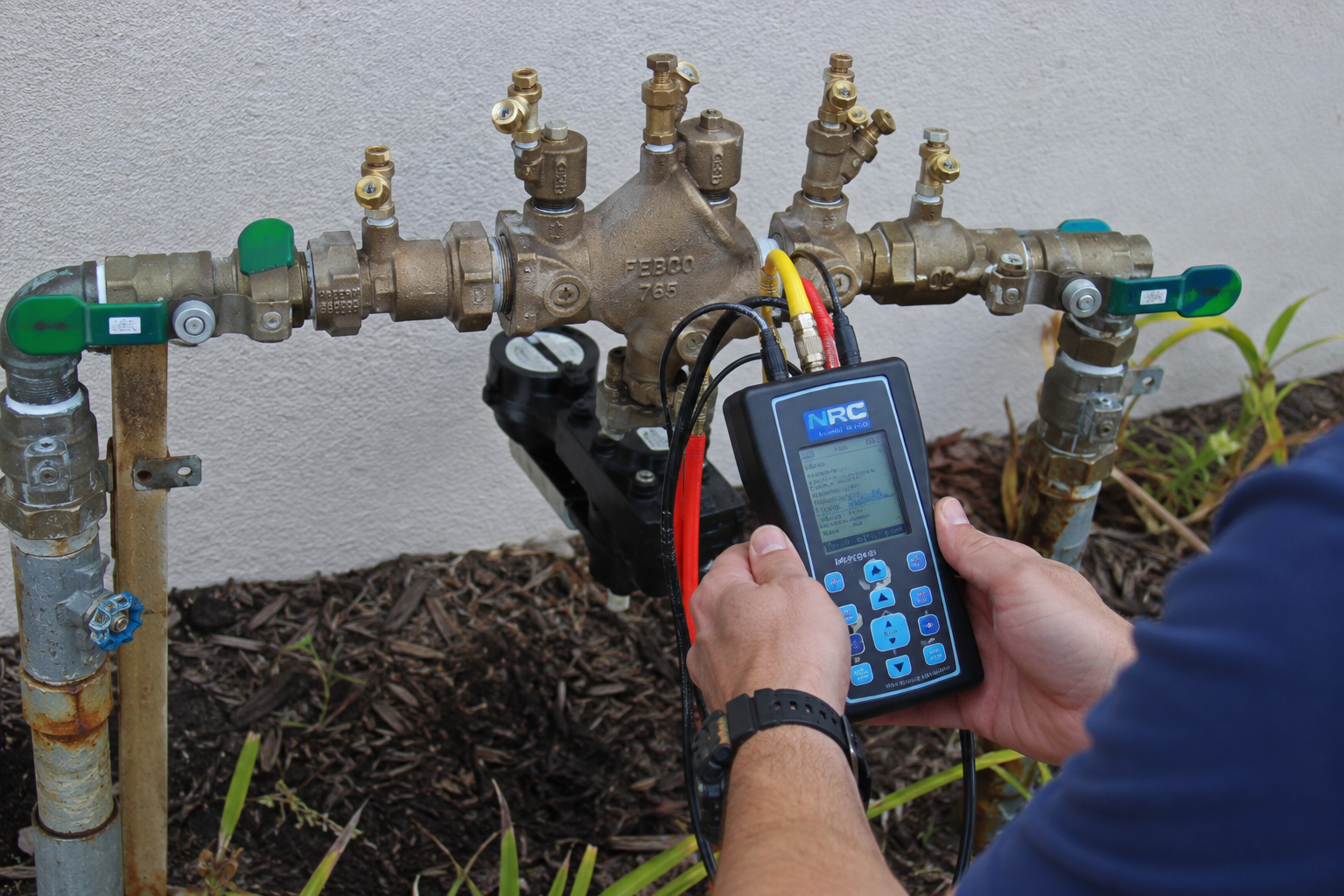
Backflow testing confirms that the device is working the way it is supposed to. A certified tester uses specialized equipment to check pressure, valve performance, and whether the assembly can still prevent reverse flow.
If the device passes, the tester documents the results and submits the required report according to the local water provider’s process. If the device fails, repairs or replacement may be needed before the property is considered compliant.
Testing is not just a box to check. It helps prevent contamination events before they happen. Without a working backflow preventer, a sudden pressure change in the water system could create a dangerous reversal of flow. Pressure changes can happen for many reasons, including water main breaks, hydrant use, fire suppression demand, plumbing repairs, or system maintenance.
When backflow occurs, the concern is not just your own plumbing. A cross-connection can potentially affect the public water supply. That is why water utilities, municipalities, and state agencies take backflow prevention seriously.
Why Certification Matters
A certified backflow tester has the training and credentials needed to test backflow prevention assemblies properly. This is important because backflow testing is technical. It requires more than looking at the device and saying it appears fine.
A proper test includes understanding the assembly type, connecting calibrated test equipment, following the correct testing procedure, reading pressure differentials, identifying signs of failure, and documenting results accurately.
Certification matters because:
-
The test needs to be accurate.
A bad test can give a false sense of security or incorrectly fail a working device. -
Local water providers may only accept reports from approved testers.
Even if someone has plumbing experience, that does not automatically mean their backflow test report will be accepted. -
The tester needs to understand compliance requirements.
Property owners often rely on the tester to know what forms, deadlines, and submission steps are required. -
Failed devices need the right next step.
Some failures can be corrected with repair. Others may require replacement or a different assembly depending on the system.
For Isle of Palms and Sullivan’s Island property owners, using a qualified backflow tester helps avoid rejected paperwork, missed deadlines, repeat visits, and unnecessary headaches.
Backflow Testing on Isle of Palms
Isle of Palms properties often have irrigation systems, outdoor water features, pools, rental units, and landscaping setups that depend on reliable water service. These features are common on coastal properties, but they also increase the importance of proper backflow prevention.
If you receive a backflow testing notice, it is important not to ignore it. The notice usually means the water provider has a record of a backflow prevention assembly connected to your property and needs current test documentation.
For property owners, the basic process usually looks like this:
-
Schedule testing with an approved or certified backflow tester.
-
The tester inspects and tests the device.
-
If the device passes, the test report is completed and submitted.
-
If the device fails, repairs or replacement may be needed.
-
The device is retested after repairs to confirm compliance.
A common mistake is waiting until the last minute. Backflow testing may seem like a quick task, but if the device fails, you need time for repair and retesting. On barrier islands, scheduling can also get tighter during busy seasons when rental turnover, landscaping, irrigation use, and property maintenance all increase.
For Isle of Palms homeowners, property managers, HOAs, and commercial properties, the safer move is to schedule testing early and keep a copy of your completed report.
Backflow Testing on Sullivan’s Island
Sullivan’s Island has many of the same backflow concerns as Isle of Palms: irrigation systems, coastal landscaping, outdoor plumbing, rental properties, restaurants, small businesses, and high-value homes where plumbing systems need to stay compliant.
Because Sullivan’s Island is a smaller, highly residential coastal community, one property’s plumbing issue can still matter to the wider water system. Backflow prevention is part of keeping the local water supply protected for everyone.
If you own or manage property on Sullivan’s Island, it is worth knowing where your backflow preventer is located and when it was last tested. This is especially important if you recently bought the property, added irrigation, renovated plumbing, installed a pool, changed landscaping, or received a compliance notice.
Older assemblies may also need attention. Coastal air, salt exposure, sand, moisture, and general wear can all affect plumbing components over time. A backflow preventer installed years ago may still look fine from the outside but fail during testing because of internal wear or valve issues.
Why Coastal Properties Need to Take Backflow Seriously
Backflow prevention matters everywhere, but Isle of Palms and Sullivan’s Island have a few property conditions that make it even more relevant.
Irrigation Systems Are Common
Many island properties rely on irrigation to maintain lawns, palms, shrubs, and landscaping. Irrigation systems can create cross-connections because water may come into contact with soil, fertilizers, pesticides, animal waste, or standing water.
A properly installed and tested backflow preventer helps keep that irrigation water from reversing into the drinking water supply.
Vacation Rentals and Commercial Properties Have Heavy Use
Short-term rental properties, restaurants, shops, and service businesses can place heavier demand on plumbing systems. More usage means more opportunities for pressure changes, wear, repairs, and compliance issues.
For property managers, backflow testing should be part of the annual maintenance checklist. It is much easier to handle testing proactively than to deal with a notice, failed inspection, or service interruption during peak season.
Salt Air and Weather Can Wear Down Components
Coastal environments are tough on mechanical systems. Backflow preventers, valves, fittings, enclosures, and nearby piping can experience corrosion, weather exposure, and physical damage. Even when a device is not used heavily, the environment can still affect performance.
Annual testing helps catch these problems before they turn into bigger issues.
Plumbing Changes Can Create New Requirements
Adding irrigation, replacing plumbing, installing a pool, changing a commercial fixture, or modifying a water service line can affect backflow requirements. If you are making property improvements, it is smart to ask whether the work changes your backflow prevention needs.
What Happens During a Backflow Test?
A backflow test is usually straightforward for the property owner. The tester locates the assembly, confirms the device information, connects testing equipment, checks valve performance, records the results, and completes the required documentation.
A standard appointment may include:
-
Locating the backflow prevention assembly
-
Inspecting the device for visible damage, leaks, or improper installation conditions
-
Testing check valves, relief valves, or other components depending on the assembly type
-
Recording manufacturer, model, serial number, size, and test results
-
Tagging or documenting the device as required
-
Submitting the test report to the appropriate water provider or giving the owner the documentation needed for submission
If the device passes, the process is usually simple. If it fails, the tester should explain what failed and what needs to happen next.
Common Reasons Backflow Preventers Fail
Backflow preventers can fail for several reasons. Some are minor. Others require more involved repairs.
Common causes include:
-
Worn internal seals
-
Debris inside the assembly
-
Damaged check valves
-
Corrosion
-
Improper installation
-
Freezing or weather damage
-
Lack of maintenance
-
Leaking shutoff valves
-
Pressure issues
-
Age-related wear
A failed test does not automatically mean the entire system needs to be replaced. In many cases, a repair can solve the issue. However, replacement may be the better choice if the device is old, badly corroded, repeatedly failing, or no longer meets current requirements.
Why You Should Not Skip Backflow Testing
Skipping backflow testing can create several problems.
First, it can put clean water at risk. The entire purpose of a backflow preventer is to protect the drinking water supply from contamination. If the device is not working, you may not know until a test is performed.
Second, it can create compliance problems. Local water providers may require test reports by a specific deadline. If your report is missing, late, or completed by someone who is not approved, you could receive follow-up notices or additional enforcement steps.
Third, it can create real estate or rental headaches. If you are selling, buying, renting, or managing a property, unresolved compliance issues can slow things down or create unnecessary stress.
Finally, skipping testing often costs more in the long run. Small repair issues can become bigger problems if they are ignored. Proactive testing helps catch issues early.
Who Needs Backflow Testing?
Backflow testing may be required for many types of properties and systems, including:
-
Homes with irrigation systems
-
Commercial buildings
-
Restaurants and food service businesses
-
Medical and dental offices
-
Multi-unit properties
-
HOA-maintained irrigation systems
-
Fire sprinkler systems
-
Pool and spa connections
-
Properties with auxiliary water sources
-
Buildings with certain mechanical or plumbing equipment
The exact requirement depends on your water provider, property type, system setup, and hazard classification. If you received a notice, you should assume action is required and schedule testing with a qualified professional.
Backflow Testing for Property Managers and HOAs
For property managers and HOAs on Isle of Palms and Sullivan’s Island, backflow testing should be handled before it becomes urgent. Managing multiple properties or shared systems means there may be several devices with different due dates.
A good annual process includes:
-
Keeping a list of each backflow preventer
-
Recording the location of each device
-
Tracking test due dates
-
Keeping copies of submitted reports
-
Scheduling testing before peak season
-
Addressing failed devices quickly
-
Communicating with owners or tenants when access is needed
This kind of organization prevents missed deadlines and makes compliance much easier year after year.
Choose a Local Backflow Tester Who Knows the Islands
Backflow testing is not just about performing the test. It is also about understanding local requirements, coastal property conditions, and the importance of timely documentation.
Working with a local provider matters because Isle of Palms and Sullivan’s Island properties often have unique access considerations, seasonal schedules, outdoor plumbing exposure, and irrigation layouts. A tester familiar with the area can help make the process smoother.
Neptune Backflow provides backflow testing and related services for Isle of Palms, Sullivan’s Island, and nearby coastal communities. Whether you received a notice, need annual testing, have a failed device, or are not sure whether your system is compliant, Neptune can help you get the answers and documentation you need.
Schedule Backflow Testing Before It Becomes a Problem
Backflow prevention protects more than one property. It helps protect the shared water supply that homes, businesses, guests, and residents rely on every day. For island communities like Isle of Palms and Sullivan’s Island, that protection is essential.
If you have a backflow preventer on your property, do not wait until the deadline is right on top of you. Schedule testing early, use a certified tester, and keep your records current.
Need backflow testing on Isle of Palms or Sullivan’s Island? Contact Neptune Backflow today to schedule service and stay compliant.
FAQs About Backflow Testing
How often does a backflow preventer need to be tested?
Many backflow prevention assemblies are required to be tested on a recurring schedule, often annually. Your exact requirement depends on your property, water provider, and system type.
Do irrigation systems need backflow prevention?
Yes, irrigation systems commonly require backflow prevention because they can create a cross-connection between the drinking water supply and water that may contact soil, fertilizer, pesticides, or other contaminants.
What happens if my backflow preventer fails?
If your backflow preventer fails, it usually needs repair or replacement followed by a retest. The goal is to confirm the device is working properly before the final report is submitted.
Can any plumber perform a backflow test?
Not always. Backflow testing typically needs to be completed by a certified or approved tester. Local water providers may reject reports from someone who is not properly certified or approved.
Do I need backflow testing if I just bought the property?
If the property has a backflow prevention assembly, you should confirm the last test date and whether the device is currently compliant. This is especially important for homes with irrigation systems, pools, commercial use, or rental activity.
Does Neptune Backflow service both Isle of Palms and Sullivan’s Island?
Yes. Neptune Backflow provides backflow testing and related backflow services for Isle of Palms, Sullivan’s Island, and surrounding coastal communities.


Leave A Comment